


Menu
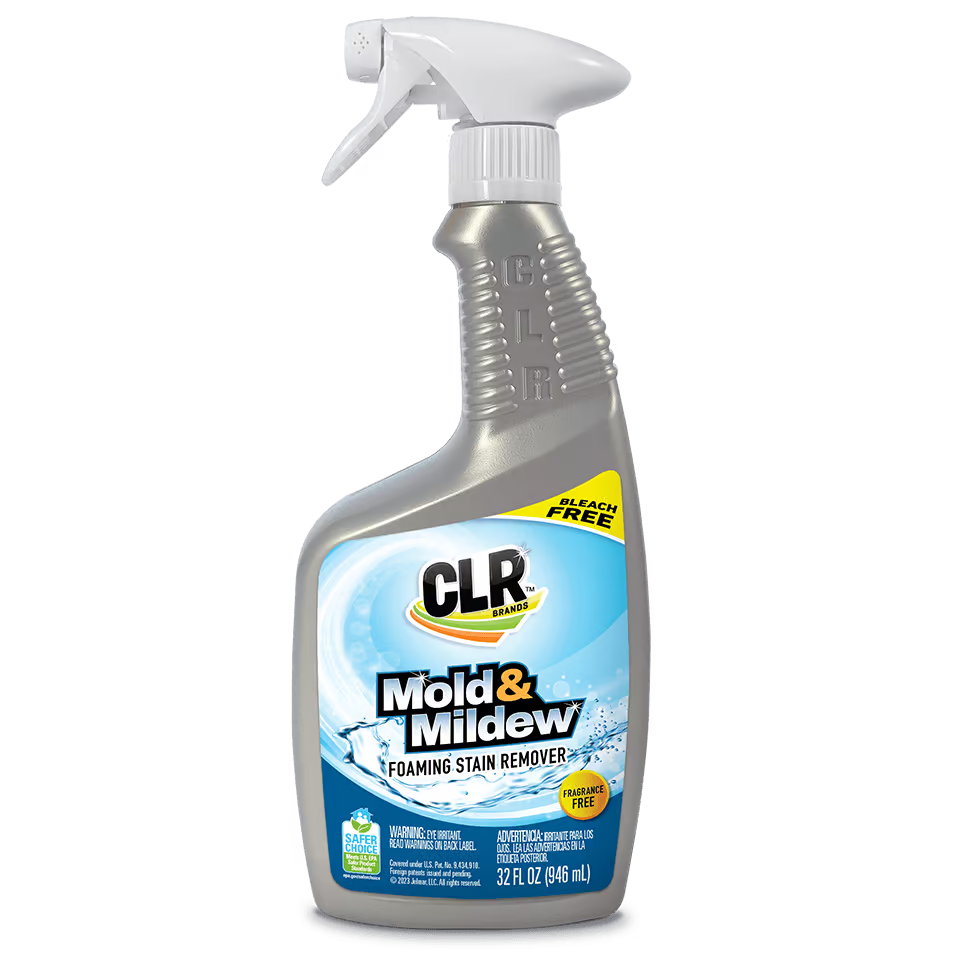


Removes tough surface mold & mildew stains on a wide variety of surfaces.
CLR Mold & Mildew Stain Remover helps remove tough surface mold and mildew stains from a wide range of household surfaces. It can be used on common problem areas such as mold in shower curtain, tile, grout, fiberglass, glass, baseboards, laminated countertops, hard plastics, brick, concrete, and other stain-prone surfaces throughout the home. The bleach-free formula uses a foam sprayer for more direct application, helping reduce splash back and limit spores from spreading into the air.
Baseboards
Brick
Ceramic
Concrete
Fabric
Fiberglass
Glass
Grout
Hardwood
Marble
Wood
Diluent: CAS #7732-18-5. Reverse Osmosis (RO) is a water treatment process that removes contaminants from water by passing the water through a membrane, (filter), where contaminants are filtered out yielding more pure quality water.
Surfactant: CAS #68439-46-3. It is used in cleaners to modify the surface tension of water, to aid in even spreading and to allow mixing with oil and dirt so that they can be rinsed away. As part of the EPA Safer Choice Program, it has been evaluated and determined to be safer than traditional chemical ingredients.
Surfactant: CAS #1643-20-5. Used in cleaners to modify the surface tension of water, to aid in even spreading and to allow mixing with oil and dirt so that they can be rinsed away; it is included in many soaps, detergents, and several groups of antiseptics. As part of the EPA Safer Choice Program, it has been evaluated and determined to be safer than traditional chemical ingredients.
Solvent: CAS #55934-93-5. Used to slow down the evaporation of many liquid products including oven cleaners and inks for ball-point and felt-tip pens. It is very effective at absorbing organic material. As part of the EPA Safer Choice Program, it has been evaluated and determined to be safer than traditional chemical ingredients.
Chelating Agent/Processing Aid: CAS #527-07-1. A salt of gluconic acid. It acts as a chelating agent that makes metals more soluble in water and is a processing aid commonly used in household cleaning products. It is often found in bar soap, sunscreen, shampoo, toothpaste and a variety of other products as well. As part of the EPA Safer Choice Program, it has been evaluated and determined to be safer than traditional chemical ingredients.
Cleaning Agent: CAS #298-16-6. Potassium Bicarbonate is an effective inorganic salt, that can be used as a replacement for sodium bicarbonate (baking soda). As part of the EPA Safer Choice Program, it has been evaluated and determined to be safer than traditional chemical ingredients.
Moistening Agent: CAS #867-56-1. Derived from the natural fermentation of sugar. Sodium lactate is the sodium salt of lactic acid. It is sometimes used in liquid soap products, as it is an effective substance used to keep things moist. As part of the EPA Safer Choice Program, it has been evaluated and determined to be safer than traditional chemical ingredients.
Chelating Agent: CAS #164462-16-2. environmentally friendly chelating agent, a compound that makes metals more soluble in water. It is a substitute for phosphates and is approved by, and listed on the EPA Design for the Environment Certification Program (DFE). As part of the EPA Safer Choice Program, it has been evaluated and determined to be safer than traditional chemical ingredients.
How Our Mold and Mildew Stain Remover Works
To remove stains on carpet:
To remove stains on fabrics:
Do Not:
If excess mold and mildew are present, wear heavy duty vinyl gloves and face mask to remove excess amounts. Use exhaust fan and open windows.


Mold and mildew stains often show up in damp, humid areas where moisture lingers, such as bathrooms, laundry areas, and around washing machine seals, grout lines, baseboards, and other hard-to-dry surfaces. Using a stain remover designed for these areas can help address visible buildup before it becomes harder to remove.
After cleaning, keeping surfaces as dry as possible can help reduce future staining. Wiping down damp areas, allowing airflow into bathrooms and laundry spaces, and cleaning problem spots regularly can help prevent mold and mildew from building up again.
For best results in front loading washing machine, product should be applied once per week, soon after using machine. Surfaces need to be allowed to dry after application. If mold is left on surface, like rubber gaskets or grout, for even a week, mold can embed into surface, in which case product will no longer work effectively.
Our product is safe to use on fully cured and oil based painted surfaces only. Always spot test first. Do not use on powder coated or aged/worn painted surfaces.
Show More FAQs