


Menu
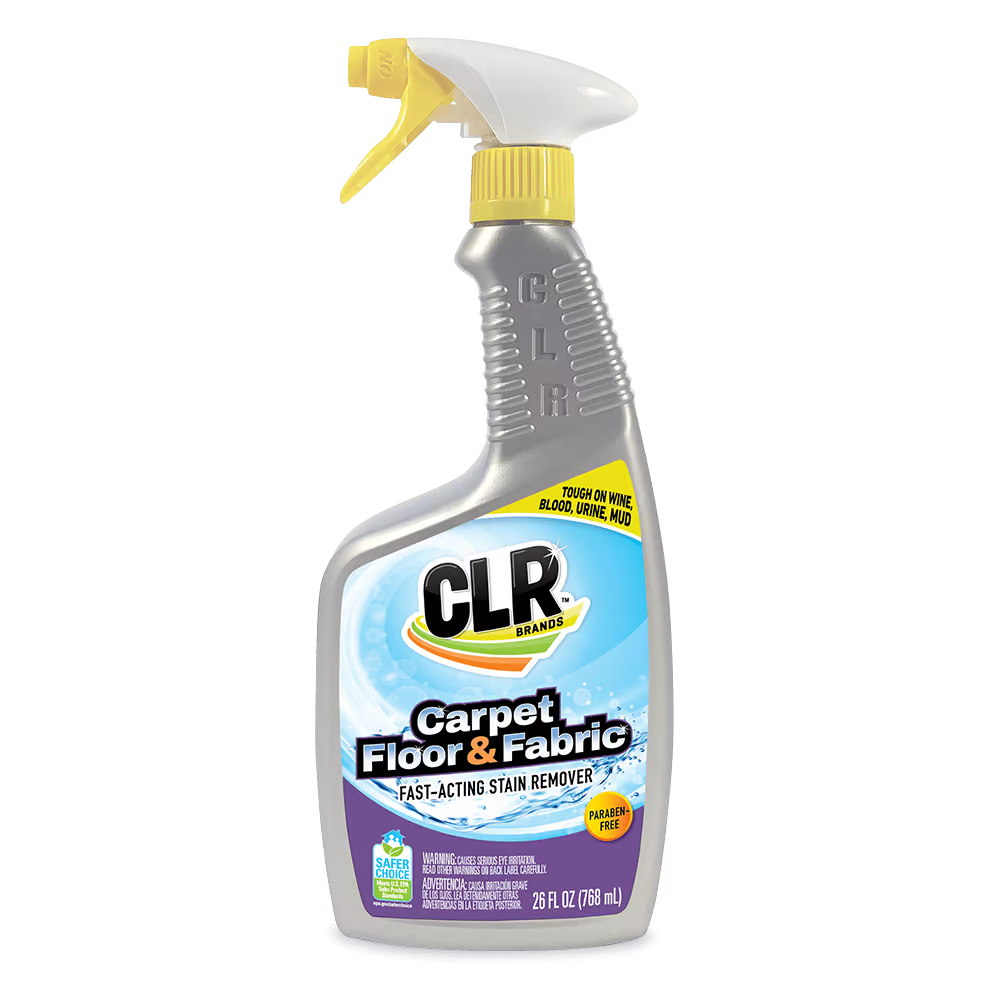


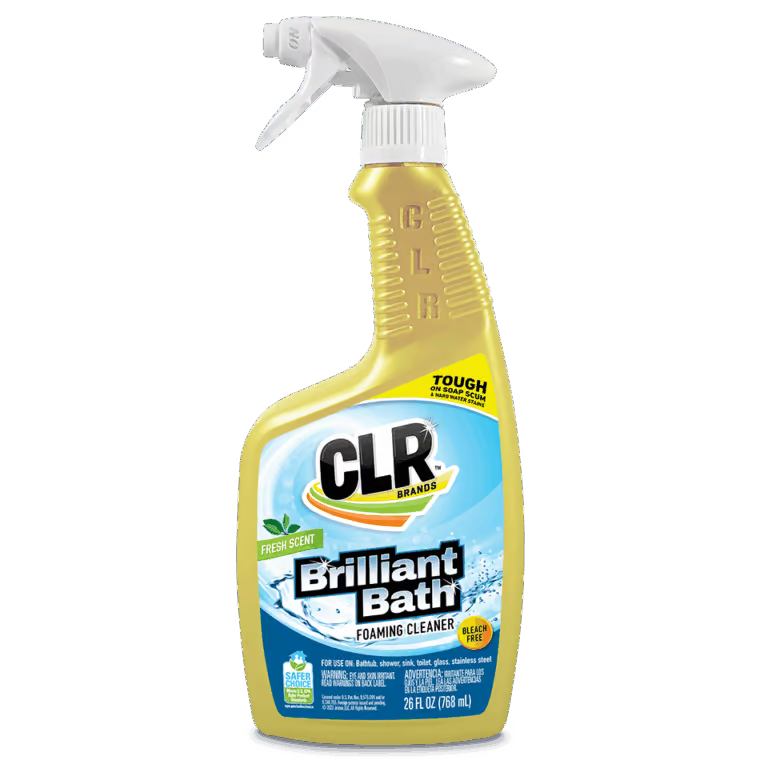
Fast-acting and versatile carpet, fabric, & floor stubborn stain remover.
Cotton
Fabric
Fiberglass
Hardwood
Laminate
Plastic/Resin
Polyester
Tile
Diluent: CAS #7732-18-5. Reverse Osmosis (RO) is a water treatment process that removes contaminants from water by passing the water through a membrane, (filter), where contaminants are filtered out yielding more pure quality water.
Surfactant: CAS #68439-46-3. It is used in cleaners to modify the surface tension of water, to aid in even spreading and to allow mixing with oil and dirt so that they can be rinsed away. As part of the EPA Safer Choice Program, it has been evaluated and determined to be safer than traditional chemical ingredients.
Solvent: CAS #14035-94-0. A powerful solvent suitable for dissolving a wide range of sticky flammable organic substances. It is insoluble in water, and is often exuded by some trees and other plants. As part of the EPA Safer Choice Program, it has been evaluated and determined to be safer than traditional chemical ingredients.
Surfactant: CAS #1643-20-5. Used in cleaners to modify the surface tension of water, to aid in even spreading and to allow mixing with oil and dirt so that they can be rinsed away; it is included in many soaps, detergents, and several groups of antiseptics. As part of the EPA Safer Choice Program, it has been evaluated and determined to be safer than traditional chemical ingredients.
Chelating Agent: CAS #526-95-4. This ingredient is an acid formed from the sugar glucose, which naturally occurs in fruit, honey and wine. It is a chelating agent; a compound that makes metals more soluble in water. As part of the EPA Safer Choice Program, it has been evaluated and determined to be safer than traditional chemical ingredients.
Odor Control: CAS #26172-55-4. This is a preservative with antibacterial and antifungal effects. Preservatives are natural or man-made ingredients designed to help ensure the safety and quality of products by protecting them against the growth of microorganisms during storage.
Odor Control: CAS #2682-20-4. These are preservatives with antibacterial and antifungal effects. Preservatives are natural or man-made ingredients designed to help ensure the safety and quality of products by protecting them against the growth of microorganisms during storage.
Test on a small hidden area before use especially: carpet, fabrics, plastics and fiberglass.
Carpet
Fabric
Floor


Not always. Some products are formulated specifically for one surface type and may not be safe or effective on the other. The CLR Carpet, Floor & Fabric cleaner is designed to work across both, as well as on hard floors like hardwood, laminate, and tile. If you're cleaning an automotive interior, the CLR Automotive Carpet, Upholstery & Fabric Cleaner is the better fit, as it's formulated specifically for car seats, door panels, and headliners.
Yes, as long as the fabric is colorfast and the product is safe for the fiber type. Always test on a small hidden area first and blot. Rubbing pushes the stain deeper into the fibers and can spread it. Cotton and polyester are listed safe surfaces; for delicate or dry-clean-only fabrics, check the manufacturer's care label before applying any cleaner. For mold or mildew stains on upholstery, CLR Mold & Mildew Clear handles those separately.
The CLR Carpet, Floor & Fabric cleaner handles wine, blood, mud, urine, ink, nail polish, paint, shoe polish, and crayon, among others. Older or set-in stains may need a second application, saturate the area, let it sit for 10 minutes, then blot with a dry clean cloth. For a full guide on treating specific stain types on white or light-colored carpet, see How to Clean a White Carpet.
Yes. The product works on hardwood, laminate, and tile in addition to carpet and fabric. Spray and wipe with a dry clean cloth, do not saturate hard floor surfaces the way you would carpet, as excess moisture can damage wood or grout over time.
Show More FAQs