


Menu




Quickly and easily dissolves and removes tough calcium and lime deposits.
CLR Calcium, Lime & Rust Remover helps remove tough calcium, lime, and surface rust buildup from common household surfaces and appliances. It can be used on problem areas such as bathtubs, toilet bowls, sinks, glass, chrome, fiberglass, stainless steel surfaces, humidifiers, dishwashers, washing machines, and shower heads. The formula is EPA Safer Choice recognized, phosphate free, and septic safe when used as directed.
- Removes calcium, lime, and surface rust buildup
- Helps clean hard water deposits on household fixtures and appliances
- Suitable for use on chrome, fiberglass, porcelain, and stainless steel
- EPA Safer Choice recognized
- Phosphate free
- Septic safe when used as directed
Chrome
Fiberglass
Porcelain
Stainless Steel
Diluent: CAS #7732-18-5. Reverse Osmosis (RO) is a water treatment process that removes contaminants from water by passing the water through a membrane, (filter), where contaminants are filtered out yielding more pure quality water.
Chelating Agent: CAS #79-33-4. Lactic acid is found in many yogurts and cheeses. It is also produced in the muscles during intense activity. Commercially, it is produced by fermentation of simple sugars. In cleaning products it functions as a chelating agent; a compound that makes metals more soluble in water. As part of the EPA Safer Choice Program, it has been evaluated and determined to be safer than traditional chemical ingredients.
Chelating Agent: CAS #526-95-4. This ingredient is an acid formed from the sugar glucose, which naturally occurs in fruit, honey and wine. It is a chelating agent; a compound that makes metals more soluble in water. As part of the EPA Safer Choice Program, it has been evaluated and determined to be safer than traditional chemical ingredients.
Surfactant: CAS #1643-20-5. Used in cleaners to modify the surface tension of water, to aid in even spreading and to allow mixing with oil and dirt so that they can be rinsed away; it is included in many soaps, detergents, and several groups of antiseptics. As part of the EPA Safer Choice Program, it has been evaluated and determined to be safer than traditional chemical ingredients.
Solvent: CAS #55934-93-5. Used to slow down the evaporation of many liquid products including oven cleaners and inks for ball-point and felt-tip pens. It is very effective at absorbing organic material. As part of the EPA Safer Choice Program, it has been evaluated and determined to be safer than traditional chemical ingredients.
Colorant: CAS #1934-21-0. A synthetic lemon yellow dye used all over the world, primarily as food coloring. As part of the EPA Safer Choice Program, it has been evaluated and determined to be safer than traditional chemical ingredients.
Colorant: CAS #3844-45-9. A blue dye used for foods and other substances. As part of the EPA Safer Choice Program, it has been evaluated and determined to be safer than traditional chemical ingredients.
1. In a well-ventilated area, mix equal parts CLR Calcium, Lime, & Rust Remover and warm water. Test on a small hidden area before full use. Apply directly to the stain with a brush, cloth, or sponge and let it sit for 2 minutes. Rinse promptly and thoroughly with cold water.
2. Do not leave the product on any surface for longer than 2 minutes. Do not mix with bleach or other household cleaners. Always check the manufacturer’s directions before use to confirm compatibility.
3. Avoid contact with wood, clothing, wallpaper, carpeting, natural stone, brass, copper, aluminum, galvanized metals, and painted, coated, or sealed surfaces. Older sinks, tubs, and tiles may be more sensitive, so spot testing is especially important. Clean spills immediately.
Use CLR Calcium, Lime, & Rust Remover in areas where mineral buildup and hard water stains commonly appear, including sinks, shower heads, toilet bowls, dishwashers, washing machines, and humidifiers.


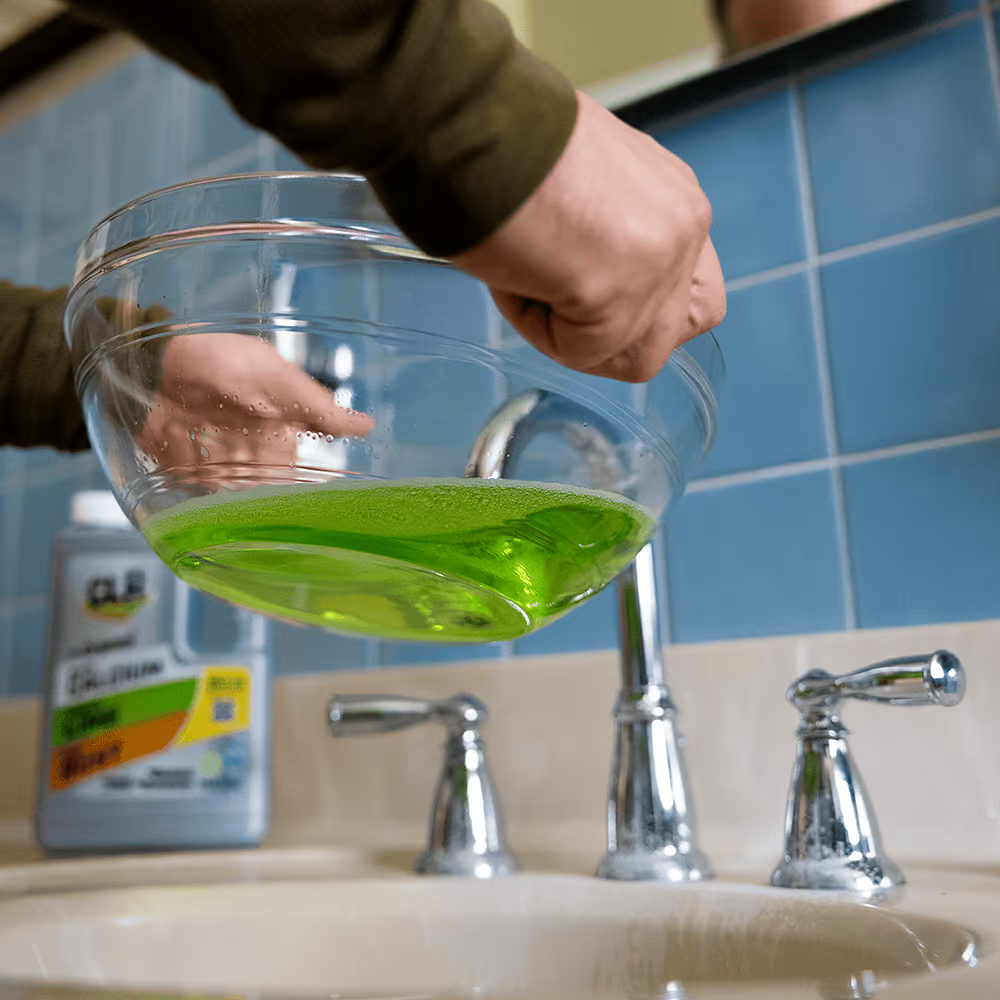
Working in a properly ventilated area, dilute CLR Calcium, Lime, & Rust Remover with an equal amount of warm water. Perform a spot test on a discreet area first. Apply the solution to the stain using a sponge, cloth, or brush. Let it dwell for no longer than 2 minutes, then rinse thoroughly with cold water. Repeat if required. Avoid mixing with bleach or other household cleaning products, and consult the manufacturer’s guidelines before use.
Mix 1 part CLR Calcium, Lime, & Rust Remover with 8 parts water for a 10 to 12 cup automatic drip coffee maker. Run the solution through a full cycle, discard it, then run two full cycles with clear cold water. Do not use in espresso machines or coffee makers that hold water permanently. Always check your manufacturer’s directions before use.
Pour enough Calcium, Lime and Rust Remover to cover bottom. Swish around in pot or pan. Add one cup of warm water, allow mixture to soak for two minutes and thoroughly rinse with cold, clean water. Using a soft scouring pad while our product is sitting on the stains is recommended. Always check with the manufacturer of your coffee pots, pans and tea kettles first for their recommendations of products that are safe and effective on their materials.
To clean a dishwasher, remove dishwashing rinse agent before using Calcium, Lime and Rust Remover. Pour a 1/2 cup of Calcium, Lime and Rust Remover directly into the bottom of an empty dishwasher (no glasses, dishes, or flatware but the racks can stay). Run a normal cycle followed by an extra rinse cycle. Make sure there are no detergents or any other chemicals in the machine while using our product. Washing Machine: Run your empty machine (no clothes) without detergent up to the main wash cycle, which is where the water stops and the cycle is about to agitate. Stop the machine and add one-half cup of Calcium, Lime and Rust Remover directly into the tub of the machine. Finish cycle. Run one additional full cycle (wash and rinse) with water only to rinse machine fully. If your machine is HE (high efficiency) and/or 'Water Saver' we recommend using a 1/4 cup of Calcium, Lime and Rust Remover, instead of the normal 1/2 cup recommended for any other type of washer/dishwasher. For Front Loading Machines: Simply add a 1/2 cup of Calcium, Lime and Rust Remover to the soap dispenser (only 1/4 of a cup for HE machines). After the full cycle has completed, run an additional rinse cycle with just water. Make sure there are no clothes or other chemicals in the machine when using our product.
Use only on metal filters. Dilute equal parts of Calcium, Lime and Rust Remover and warm water into a plastic container. Dip the filter into the solution for about two minutes. Brush to loosen buildup and rinse with cold, clean water. Allow to dry.
Calcium, Lime and Rust Remover can not only remove the finish off of brass, aluminum and copper, but can also pit certain grades of brass, copper and aluminum.
Do not use CLR Calcium, Lime, & Rust Remover on wood, clothing, wallpaper, carpeting, natural stone, brass, copper, aluminum, galvanized metals, or painted, coated, or sealed surfaces. It should also not be used on steam irons, steamers, steam machines, radiators, or ice makers, since the product may not be compatible with their internal components. Avoid using it on cars, except for rust on chrome or stainless steel wheels only, and do not use it to remove oil from concrete driveways or garage floors. Always avoid surfaces that cannot be thoroughly rinsed after 2 minutes, and spot test first before full use.
When cleaning a showerhead, we recommend using a 50/50 solution (equal parts) of Calcium, Lime and Rust Remover and warm water. If possible, remove the showerhead and submerge it in the solution for no longer than 2 minutes (using an old toothbrush on the face of the showerhead after it has soaked will assist in removing the mineral buildup) then rinse promptly and thoroughly with cold water. Repeat at full strength if necessary, rinsing thoroughly after each application.
To clean hard water stains, we recommend using a 50/50 solution (equal parts of Calcium, Lime and Rust Remover and warm water) into a glass or porcelain bowl. Apply solution to the affected stained areas of the glasses using a damp cloth or sponge. After 2 minutes, rinse thoroughly with cold, clean water. If it seems that Calcium, Lime and Rust Remover helped a bit but the glasses are not completely clear, repeat at full strength if necessary. Due to the natural density and hardness of calcium as a mineral, the calcium can actually etch and embed itself into the material of the glass (usually present by having a cloudy appearance vs. spotty).
If it seems that the Calcium, Lime and Rust Remover did not help at all, the glasses may be etched and there is no remedy to remove the cloudiness from the glasses. The cloudiness is actually tiny cuts made in the glass by deposits in the water. The only thing that may remove the etching is a jeweler’s polish.
It is not recommended that Calcium, Lime and Rust Remover be used in steam irons. The acids in our products are not compatible with the components of steam irons, steamers or steam machines. We recommend contacting the manufacturer of your particular steam iron, steamer or steam machine for their recommendation for products safe and effective on their materials.
Yes, Calcium, Lime and Rust Remover is septic safe. By the time it reaches the septic system it is neutralized with water.
No. CLR Calcium, Lime and Rust Remover is not recommended for use in or around swimming pools, including pool tile. It should never come into contact with chlorine or other pool chemicals, as this can create toxic fumes. It may also damage or remove the finish from pool tile. For safe and effective cleaning, consult a pool maintenance expert or follow the manufacturer’s recommendations for your pool surfaces.
We do not recommend using Calcium, Lime and Rust Remover on any natural stones, especially marble (even synthetic). The acids in our product will remove the seal, penetrating the marble and can compromise the natural beauty of marble. Even synthetic marbles are coated and real marble dust is used to give the effect of real marble. If you spill Calcium, Lime and Rust Remover accidentally on these surfaces, make sure to call a marble professional for further instructions.
We do not recommend using Calcium, Lime and Rust Remover on galvanized metals. When a metal is galvanized, a Zinc coating is put over the metal (usually to protect it from rusting). The acids in Calcium, Lime and Rust Remover will remove the Zinc which could compromise the material.
We do not recommend using Calcium, Lime and Rust Remover on cast iron. The acids in Calcium, Lime and Rust Remover can compromise the metal.
We recommend using or disposing of Calcium, Lime and Rust Remover within 3 years. Make sure cap is securely fastened after each use.
We do not recommend using Calcium, Lime and Rust Remover on any natural stones, including granite. The chemicals in the Calcium, Lime and Rust Remover can remove the seal and penetrate the stone.
Jelmar DOES NOT RECOMMEND the use of Calcium, Lime and Rust Remover in or on any water heaters (tank or tankless); however there is a website that does. Again, JELMAR DOES NOT RECOMMEND THE USE OF IN A WATER HEATER. The chemical make-up of Calcium, Lime and Rust Remover is not compatible with the materials or components of a water heater and cannot be thoroughly flushed through the water heater after 2 minutes. We recommend using what the manufacturer of the water heater deems safe and effective.
Yes, Calcium, Lime and Rust Remover is found to be safe on fiberglass. Always spot test first in an inconspicuous area. Begin with a mixture of Calcium, Lime and Rust Remover and water and progress to full strength if needed.
No, Calcium, Lime and Rust Remover should never be used on clothing. Please find an appropriate stain remover or laundry detergent. If Calcium, Lime and Rust Remover is spilled on fabric, you must rinse immediately. It may break down the fibers in clothing and/or fabric.
Calcium, Lime and Rust Remover should not be used to clean rugs or carpeting. Calcium, Lime and Rust Remover can break down the fibers in rugs and carpeting and pull the color out.
Yes, Calcium, Lime, and Rust Remover is great for cleaning pet bowls from food, grime and water deposits! Dilute equal parts warm water and Calcium, Lime, and Rust Remover to clean ceramic, stainless steel or plastic bowls. Leave on for 2 minutes using a sponge or scouring pad to assist in removal of stains, then rinse thoroughly with cold water. While our product is non-toxic we recommend washing the bowls prior to putting food or water back in them.
Our Calcium, Lime and Rust Remover is non-toxic and water soluble. The chemicals in the product are derived from vegetables, however we recommend all safety precautions be followed, per the back label of the bottle.
Calcium, Lime, & Rust Remover and Probiotic Multi-Surface are both biobased products, meaning they contain largely renewable and plant-based ingredients. CLR Brands® has been recognized as a BioPreferred Champion for 2022, signifying our commitment to using renewable materials, supporting the bioeconomy, and bettering the planet. USDA's BioPreferred Program was first introduced in the 2002 Farm Bill with the goal of increasing the development, purchase, and use of biobased products.
Show More FAQs