Fast and effective way to clean away calcium, lime and rust deposits.
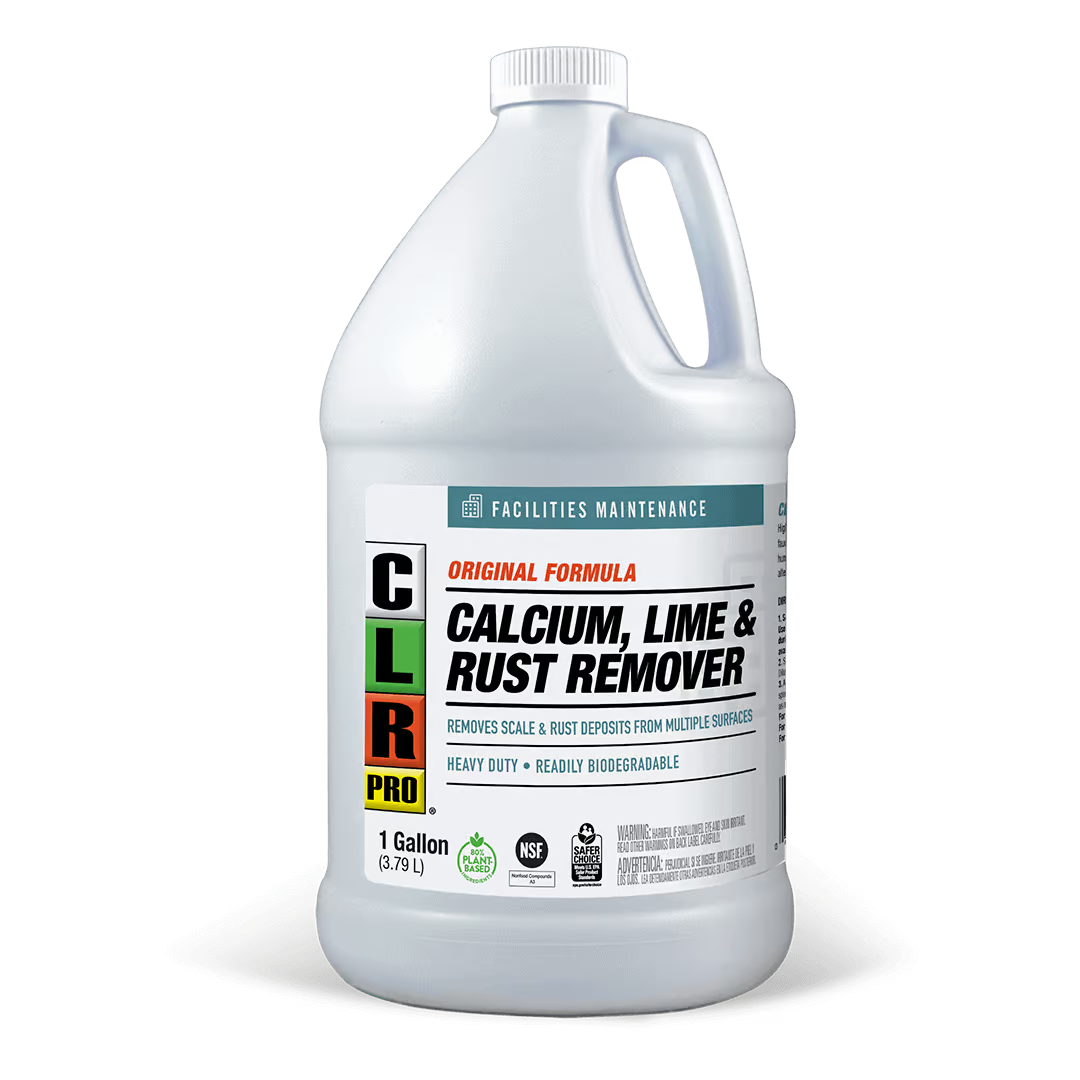
Fast and effective way to clean away calcium, lime and rust deposits.
Overview
Ingredients
Instructions
AVAILABLE IN :






Diluent: CAS #7732-18-5. Reverse Osmosis (RO) is a water treatment process that removes contaminants from water by passing the water through a membrane, (filter), where contaminants are filtered out yielding more pure quality water.
Chelating Agent: CAS #79-33-4. Lactic acid is found in many yogurts and cheeses. It is also produced in the muscles during intense activity. Commercially, it is produced by fermentation of simple sugars. In cleaning products it functions as a chelating agent; a compound that makes metals more soluble in water. As part of the EPA Safer Choice Program, it has been evaluated and determined to be safer than traditional chemical ingredients.
Chelating Agent: CAS #526-95-4. This ingredient is an acid formed from the sugar glucose, which naturally occurs in fruit, honey and wine. It is a chelating agent; a compound that makes metals more soluble in water. As part of the EPA Safer Choice Program, it has been evaluated and determined to be safer than traditional chemical ingredients.
Surfactant: CAS #1643-20-5. Used in cleaners to modify the surface tension of water, to aid in even spreading and to allow mixing with oil and dirt so that they can be rinsed away; it is included in many soaps, detergents, and several groups of antiseptics. As part of the EPA Safer Choice Program, it has been evaluated and determined to be safer than traditional chemical ingredients.
Solvent: CAS #55934-93-5. Used to slow down the evaporation of many liquid products including oven cleaners and inks for ball-point and felt-tip pens. It is very effective at absorbing organic material. As part of the EPA Safer Choice Program, it has been evaluated and determined to be safer than traditional chemical ingredients.
Colorant: CAS #1934-21-0. A synthetic lemon yellow dye used all over the world, primarily as food coloring. As part of the EPA Safer Choice Program, it has been evaluated and determined to be safer than traditional chemical ingredients.
Colorant: CAS #3844-45-9. A blue dye used for foods and other substances. As part of the EPA Safer Choice Program, it has been evaluated and determined to be safer than traditional chemical ingredients.
For light soils: Mix 1 part CLR and 4 parts warm water
For medium soils: Mix equal parts (1:1) CLR and warm water
For heavy soils: Use full strength CLR
Your spot for everything safety
See it in action